LOVE TRAVEL ENGLAND
  • South West COAST Path
  • Our journey
  • Trail Notes
  • The Hikes
    • Somerset & Exmoor Hikes
    • North Devon Hikes
    • North Cornwall Hikes
    • West Cornwall Hikes
    • South Cornwall Hikes
    • South Devon Hikes

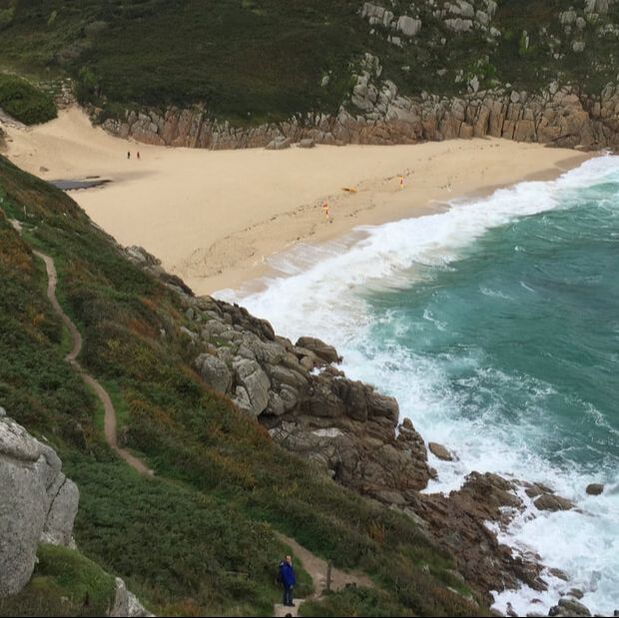
Technically, cell phone technology started right here on Porthcurno Beach.

10/14/2023

 
Picture
Who knew? Major history and technological invention was made right here in the clear turquoise waters and fine golden sands.
Picture
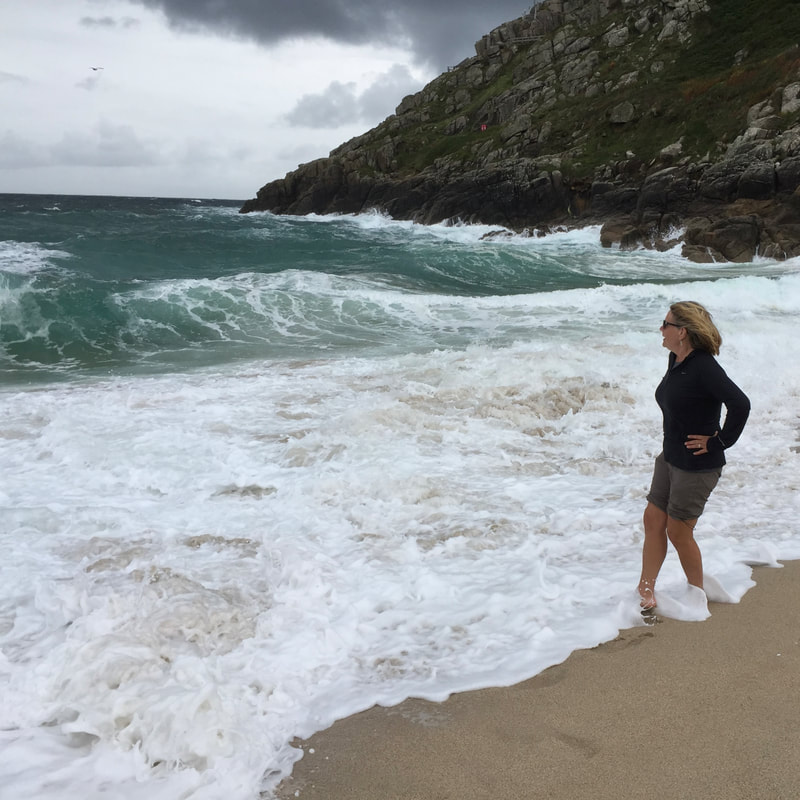
I'm probably standing close to where the first international telegraph cable was lugged up on shore.
Also, maybe one of the first phishing attempts started here. It all involves science and history but I’m skipping the boring complicated parts and sticking to the juicy, can-you-believe-it parts. 
In the late 1900s the telegram, which uses Morse code, was the quickest way to send a message; sort of like social media but with dots and dashes instead of words and pictures. Imagine how hard it was to convey emotion without smiley faces. These messages flew magically through the air via wires and cables.

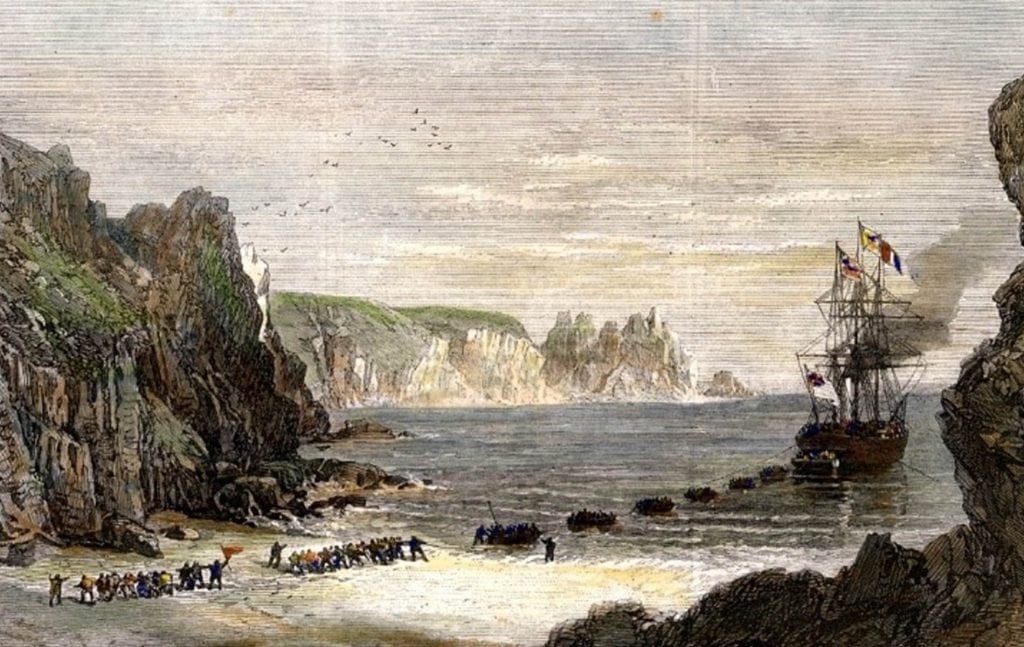
About 150 years ago the shore end of the very first international telegraph cable, which must of been hugely long and unthinkably heavy, was hauled out of the sea like a wriggly serpent and up onto the beach in Porthcurno. This cable would connect Britain to India and later, to other parts of the British Empire.
Picture
When the Eastern Telegraph Company, the largest cable-operating company in the world, was formed Porthcurno became the hub of communication for the entire British Empire. Soon they would be the most important telegraph station in the world. The international telegram, snaking proudly though miles of undersea cable, was king in the communication sector. 

​But then came a nasty rivalry that involved spying and subterfuge and theft and hurtful words. This is the juicy part. 
Picture
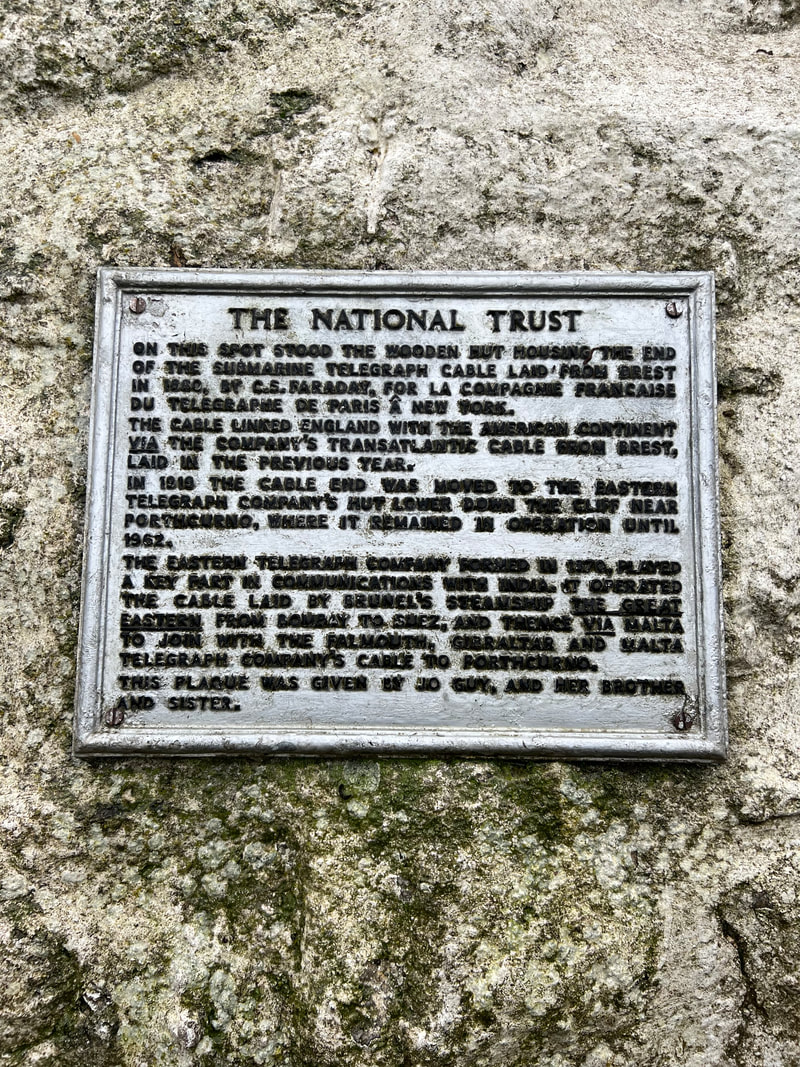
It was raining too hard to read this plaque properly so we took a pic, though it's too hard to read the pic as well.
The rivalry started when technological innovations brought new-fangled capabilities to the communication sector. Nobody knew it at the time but that cable would soon be dying a lonely death on the lonely sea floor, despite all the hard work drudging it up onto Porthcurno Beach after pulling it 2000 miles across the sea.
​ 

It all started In 1888 when Heinrich Herz (of hertz and megahertz fame) discovered and produced radio waves. An article about these radio waves caught the eye of an Italian scientist named Guglielmo Marconi. The article suggested that radio waves could be used to communicate without needing cables. A light bulb went off in Marconi’s head (luckily these had recently been invented) and he started experimenting with sending signals using electromagnetic waves. No cables. No wires. No back-breakingly heavy serpents slithering on the beach.
In 1901, Marconi sent and received the first radio signals across the Atlantic Ocean, ignoring the pundits who predicted that the waves would be lost due to the curving of the earth over that long distance. Setting up a specially designed wireless receiver in Canada, he used a glass tube filled with iron filings and some balloons to lift the antenna way up high. No unwieldy cables needed at all. And from where were those very first wireless telegrams sent? Just down the beach from Porthcurno in Poldhu, Cornwall.
“Shortly before midday I placed the single earphone to my ear and started listening. The receiver on the table before me was very crude -- a few coils and condensers and a coherer -- no valves, no amplifiers, not even a crystal. But I was at last on the point of putting the correctness of all my beliefs to test. The answer came at 12: 30 when I heard, faintly but distinctly, pip-pip-pip. I handed the phone to Kemp: "Can you hear anything?" I asked. "Yes," he said. "The letter S." He could hear it.

I knew then that all my anticipations had been justified. The electric waves sent out into space from Poldhu had traversed the Atlantic -- the distance, enormous as it seemed then, of 1,700 miles -- unimpeded by the curvature of the earth. The result meant much more to me than the mere successful realization of an experiment.

​As Sir Oliver Lodge has stated, it was an epoch in history. I now felt for the first time absolutely certain that the day would come when mankind would be able to send messages without wires not only across the Atlantic but between the farthermost ends of the earth.”


                                                                               ~ Guglielmo Marconi in 1901
Rightfully concerned that Marconi’s invention might pose a commercial threat to that 2000-mile-long cable they just dragged across the world and hauled up on the beach, the Eastern Telegraph Company did what many companies do in times of trouble, they set up a 170 ft wooden mast on the cliff above Porthcurno to spy on Marconi’s Poldhu station. This was hugely visible for miles around but still, it worked.
​

The telegraph company was not only able to record several of Marconi’s private messages and publish them in a magazine, but they intercepted a public demonstration by interjecting rude messages into the live broadcast. That’s what the article called them: “rude messages’. If only we could know what these messages were. Probably something involving “your mom is so stupid..” or “I know I am but what are you?” We will most likely never know. The feud continued until eventually, as happens today, a merger united Britain’s communications into one operating company, and the Cable & Wireless Limited was formed. Probably most of the men who hauled that cable and built that mast and eavesdropped and came up with rude messages, as well as most of those men on Marconi's team who were appalled to discover their clever wireless invention was not as private as they thought, lived happily ever after. The end.

Comments are closed.

The South West Coast Path
Our Journey
The Hikes
Trail Notes
Contact

​

Burly Biker Dude on Yorkshire Pudding

​Copyright © 2026
  • South West COAST Path
  • Our journey
  • Trail Notes
  • The Hikes
    • Somerset & Exmoor Hikes
    • North Devon Hikes
    • North Cornwall Hikes
    • West Cornwall Hikes
    • South Cornwall Hikes
    • South Devon Hikes